OH3 vs HHP3 Sprinkler Standards: The Growing Cost and Design Implications for Residential Development
21st May 2026
As we mentioned in our previous article on secondary staircore mandate – Fire safety requirements continue to evolve across the UK built environment, and one emerging issue for developers is the increasing divergence between building regulation compliance and insurer expectations when specifying sprinkler systems. A key area of focus is the classification of sprinkler systems in residential schemes that include ancillary spaces such as car parks. While many developments may satisfy statutory requirements under traditional standards, insurers are increasingly requiring enhanced protection levels, creating both cost and design implications that can materially affect project viability.
Understanding the difference: OH3 and HHP3
There are two classifications commonly under consideration, OH3 (Ordinary Hazard Group 3) and HHP3 (High Hazard Process Group 3). These standards define the performance requirements for sprinkler systems based on the anticipated fire load and intensity of a space. While both are intended for areas where fire risk is considered significant, the distinction lies in the level of protection required.
OH3 (Ordinary Hazard Group 3)
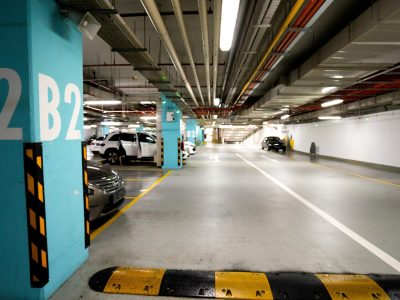
OH3 is commonly used in environments where there is a moderate to high fire load, but where fire growth is considered relatively manageable under standard suppression design criteria. In many residential developments, car parks have historically been designed to this standard to satisfy building regulations.
HHP3 (High Hazard Process Group 3)
HHP3 requires a significantly greater water demand, increased storage capacity, and often more substantial infrastructure to support fire suppression. This reflects a higher assessed fire risk and a greater potential for rapid fire development. Some insurers are now requiring HHP3 classification for uses such as enclosed or car parks, driven by updated fire incident data, changing vehicle technologies, and evolving risk assessments.
Why the shift matters?
The distinction between OH3 and HHP3 may appear technical, but for developers and project teams it can have substantial commercial and space-planning consequences. It is increasingly advisable to engage with insurers and fire protection engineers at the earliest stages of design to establish the required performance standard for a specific scheme. Late-stage changes between standards can trigger significant redesign and cost uplift. On a typical residential building, moving from OH3 to HHP3 can add approximately £0.50 per ft² GIA in construction cost. While this may seem marginal on a unit basis, the cumulative impact on larger developments can be considerable.
Cost implications beyond the sprinkler system
The direct cost increase is only one part of the challenge. Upgrading to HHP3 can also influence wider building design and infrastructure requirements.
Potential impacts include:
1. Increased Plant and Tank Requirements
Higher water demand can necessitate:
Larger water storage tanks
Additional pump capacity
Increased plant room space
Enhanced riser and distribution infrastructure
This can affect basement layouts, service coordination, and net usable area.
2. Design Reconfiguration
A change in sprinkler classification may require revisions to:
Structural layouts
MEP coordination
Ceiling zones
Service routes
Plant access arrangements
For schemes already in planning or technical design, these adjustments can create delays and additional consultant costs.
3. Pressure on Development Viability
Where margins are already constrained, an unplanned upgrade in fire protection specification can create viability pressure — particularly in high-density urban schemes where basement space and plant areas are tightly optimised.
The Regulatory and Insurance Disconnect
A growing issue for the sector is the discrepancy between statutory life safety requirements and property protection standards imposed by insurers.
For example:
Under UK building regulations, including Approved Document B, some car parks may still be acceptable under the less demanding BS EN 12845 OH classification.
However, insurers operating under the LPC Rules and associated technical bulletins, such as TB229, may require HHP3 based on property risk considerations.
This creates a challenging position for developers: a scheme may be fully compliant for regulatory approval but still fail to meet insurer requirements needed for practical completion, funding, or operational occupation.
Why Early Engagement Is Critical
The widening gap between compliance and insurance expectations means fire strategy can no longer be treated solely as a regulatory exercise. To avoid costly redesigns, project teams should consider engaging the below at the earliest concept stages:
Fire engineers
Insurers
M&E consultants
Cost consultants
Design teams
By identifying the required standard upfront, developers can:
Reduce redesign risk
Protect programme certainty
Improve cost accuracy
Maintain design efficiency
Support smoother insurer sign-off
Looking ahead
As vehicle technology evolves, particularly with the growth of electric vehicles and associated battery fire concerns, insurers are expected to continue reviewing fire suppression requirements for car parks and similar spaces.
This means enhanced sprinkler standards such as HHP3 may become increasingly common across residential and mixed-use developments.
For developers, the key challenge will be balancing compliance, insurer expectations, and commercial viability. Those who address these requirements proactively through integrated design and cost planning will be best placed to manage both risk and opportunity in an increasingly complex regulatory environment.