
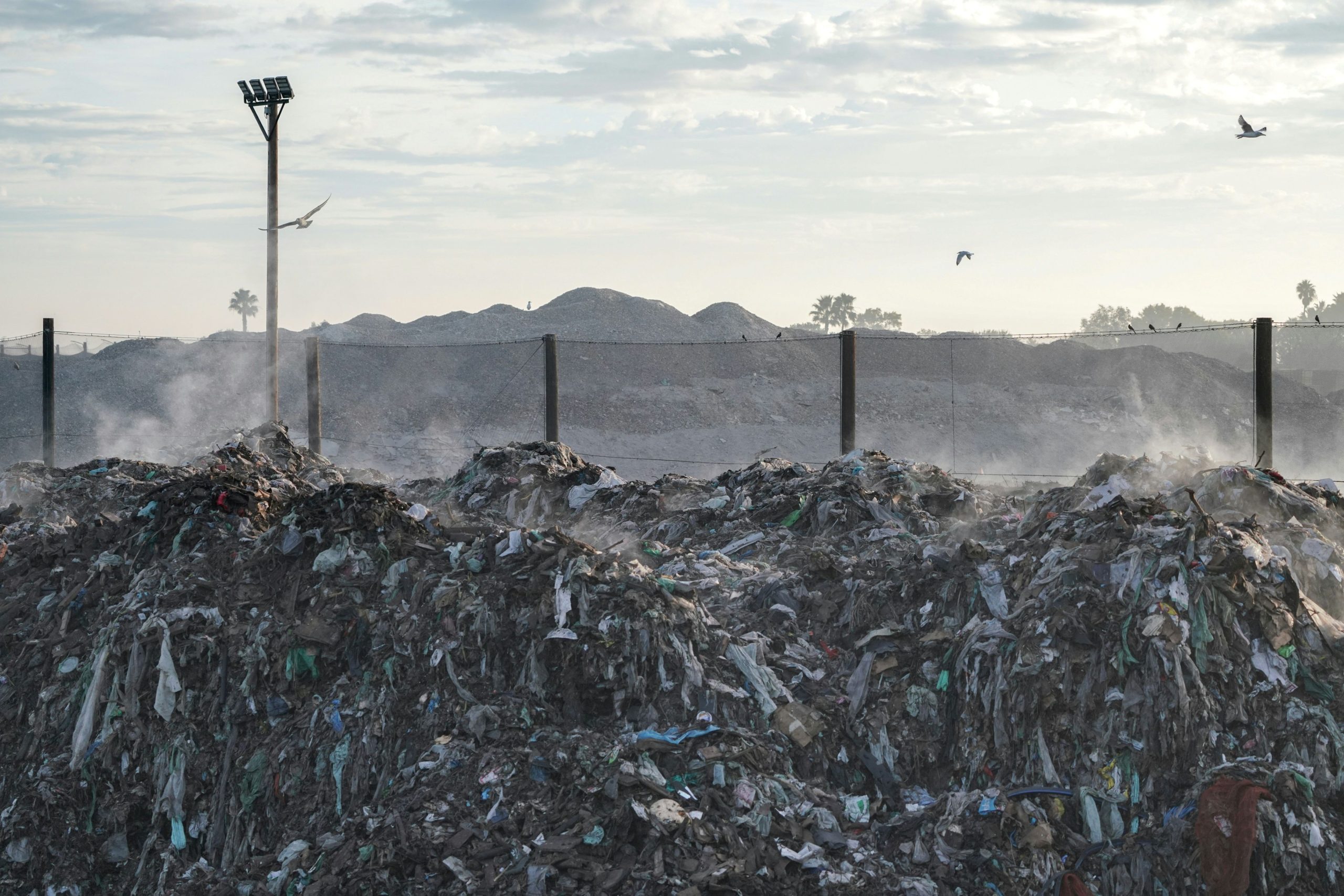
The cost of Landfill Tax is changing from April 2026, reflecting the wish of the UK Central Government to reduce material taken to landfill that could instead be reused or recycled.
The calculation for landfill tax has embedded within it an escalating rate based on RPI which means projects currently in design will be more effected than those in construction, where the works creating the tax burden are further in the future.
The graph shown indicates the emerging cost implications of the April 2026 Landfill Tax changes for projects. Projects commencing from RIBA Stage 1 now will face an increase based on RPI years in the future. Based on current forecasts, the tax increase introduces a measurable and escalating cost pressure on developments, particularly those incorporating basements, with further annual increases expected where project start dates are later.
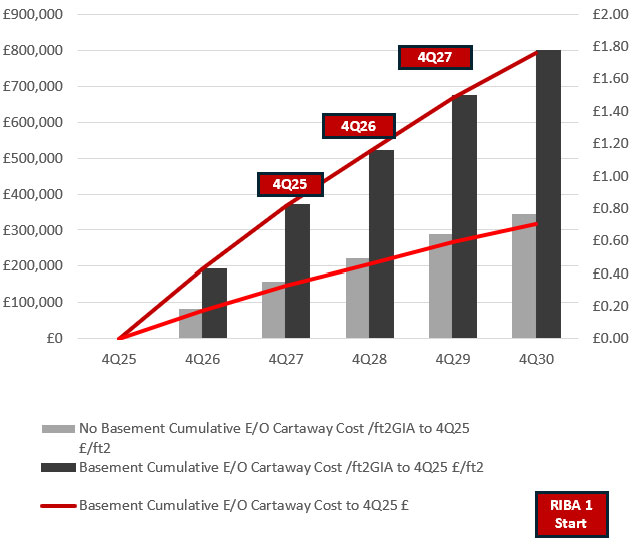
These figures relate only to the planned Landfill Tax increase and do not include any other future cost changes, such as construction inflation. All figures are based on an example 400,000ft2 residential building, with an additional 30,000ft2 included where a basement is assumed.
Using an example model, a project starting at RIBA Stage 1 now, has embedded within it a latent additional cost to be enforced for April ’26 Landfill Tax changes of around £0.35ft2 for projects without basements, or £0.82ft2 for projects with basements (subject to design).
Based on currently predicted RPI forecast change, this increases by around £0.14ft2 per year, for each year the project start is delayed for projects without basements and £0.32ft2 for projects with basements (subject to design).
“The April 2026 Landfill Tax changes will create an escalating cost pressure – particularly for early-stage and basement-heavy schemes – making proactive cost planning and waste reduction strategies essential from the outset.”
Chris Patrick – Residential Champion
Quantem